
Preamble
In the ritual world of North Malabar, the sacred rarely speaks in a single voice. Within the living tradition of Theyyam, the divine appears in many forms—fierce, playful, distant, and intimate. Nowhere is this contrast more vividly felt than in Edappara, where Chamundi Theyyam and Uchitta Theyyam unfold on the same afternoon (March 5) as two powerful, yet profoundly different, expressions of the same goddess energy.
To witness both, back-to-back in daylight, is to experience not just two performances, but two emotional universes.
Chamundi: The Goddess in the Heat of Confrontation
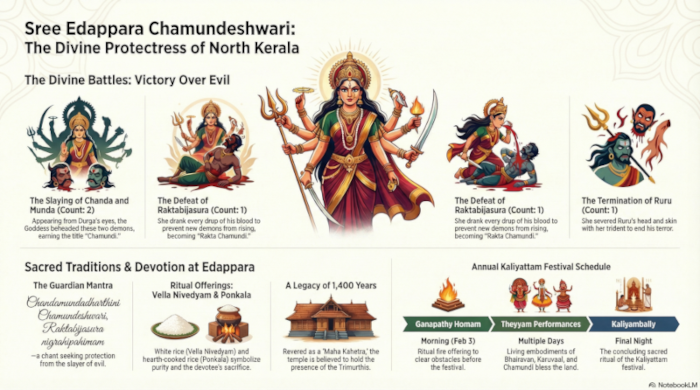
Chamundi Theyyam embodies the fierce, unrestrained power of Durga in her most intense manifestation. As Chamundi, she is the destroyer of evil, the force that confronts darkness head-on.
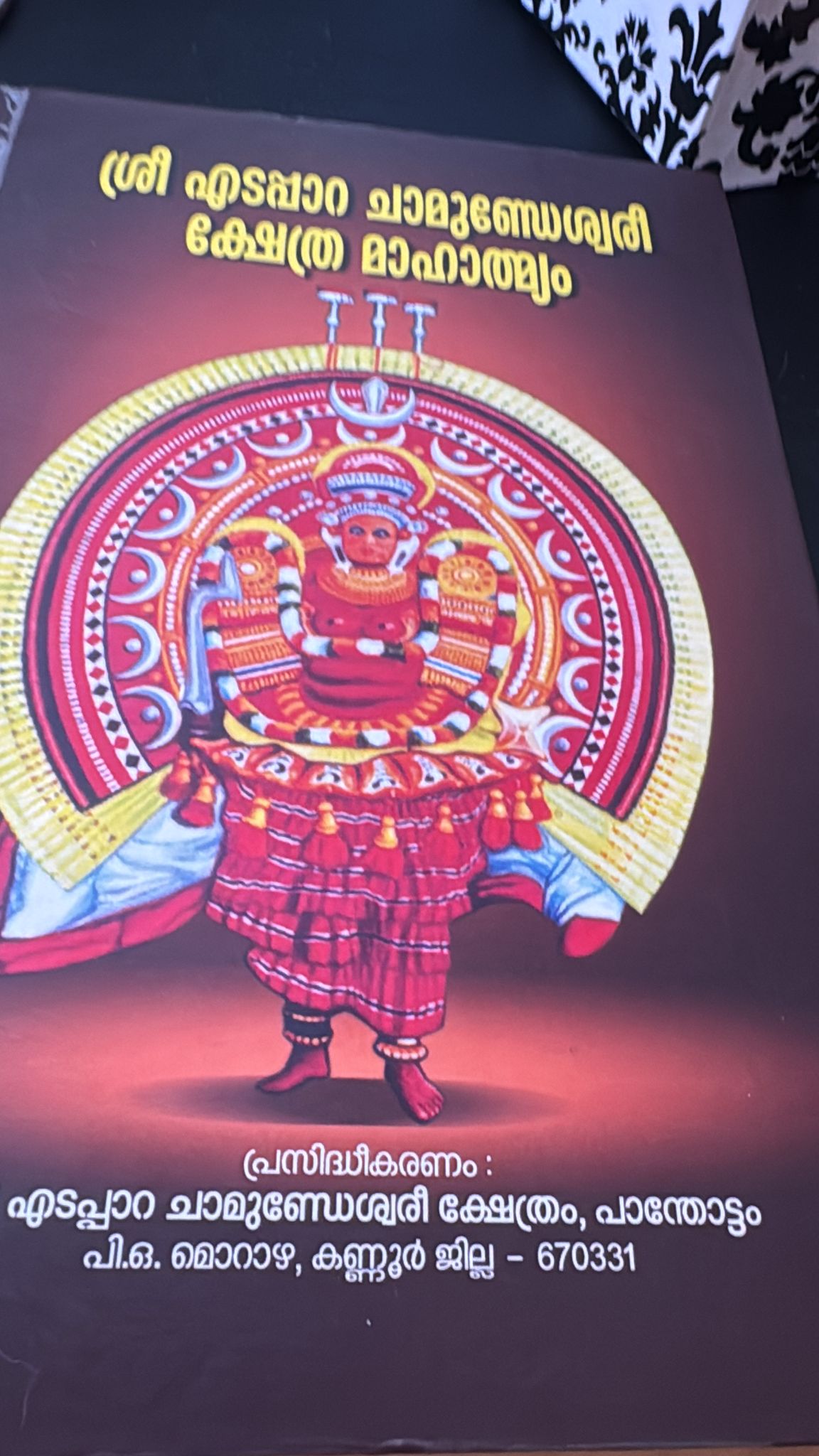
In Edappara, Chamundi does not rely on nightfall to create intensity. Even under the afternoon sun, the performance generates its own charged atmosphere. The towering headgear, blazing ornaments, and forceful, rhythmic movements transform the space into something electric.
This is not a moment of calm or conversation. This is confrontation made visible.
Devotees stand at a respectful distance, watching with reverence. The energy feels unpredictable, almost overwhelming. Every gesture carries symbolic weight—each step an enactment of protection and destruction. Chamundi does not invite familiarity; she commands awe and surrender.
Uchitta: The Goddess Who Listens
If Chamundi is confrontation, Uchitta Theyyam is connection.
Performed in the same post-noon stretch, Uchitta represents a form of Bhagavathi that feels closer, warmer, and more accessible. The intensity has shifted—not diminished, but transformed into something that welcomes approach.
In Edappara, Uchitta carries a distinctly jovial and interactive quality. The performer may smile, gesture playfully, and engage directly with devotees. There is space for conversation, reassurance, and even lightness.
People step forward without hesitation. They speak, seek guidance, and receive blessings. The goddess, in this moment, is not distant—she is present among them.
Two States, One Afternoon
What makes the Edappara experience so compelling is that both Theyyams unfold within the same temporal frame—not separated by day and night, but by state of being.
-
Chamundi Theyyam reveals the goddess in a state of intense action—fierce, protective, and immersed in confrontation.
-
Uchitta Theyyam reveals the goddess in a state of engagement—approachable, responsive, and relational.
The contrast is not about time of day. It is about ritual intention and emotional register.
One shows what it means to face and overcome. The other shows what it means to listen and sustain.
Distance and Intimacy
Perhaps the most striking difference lies in how each Theyyam shapes the relationship between deity and devotee.
With Chamundi, there is distance. The power is immense, the presence overwhelming. Devotees approach with caution, aware that they are in the presence of a force that demands reverence.
With Uchitta, that distance dissolves. The same divine energy now invites closeness. The goddess listens, responds, and even shares moments that feel deeply human.
In Edappara, this shift unfolds within hours—as though the ritual itself guides the community from awe to intimacy.
The Rhythm of Ritual Life
Seen together on the afternoon of March 5, Chamundi and Uchitta Theyyam reveal a profound truth: the divine is not fixed. It moves, transforms, and meets people in different ways—even within the same day.
There are moments that call for strength, confrontation, and the courage to face darkness. And there are moments that call for connection, healing, and reassurance.
Edappara holds both—side by side, under the same sun.
Final Reflection
To witness Chamundi and Uchitta in the same afternoon is to understand that the goddess is not only a warrior or a mother—she is both, and more.
Chamundi reminds us that protection sometimes comes through fierce resistance.
Uchitta reminds us that, even in the same span of time, there is room for dialogue, warmth, and grace.
Between them lies the full spectrum of the sacred—power that can overwhelm, and the same power that can gently reach out and bless.